
Invisalign in Bondi Junction
Book in with experienced Bondi Junction-based Invisalign provider Dentist in the Park for a discreet and effective approach to teeth straightening. Invisalign is a leading clear aligner system that uses a series of removable aligners to straighten your teeth without brackets and wires.
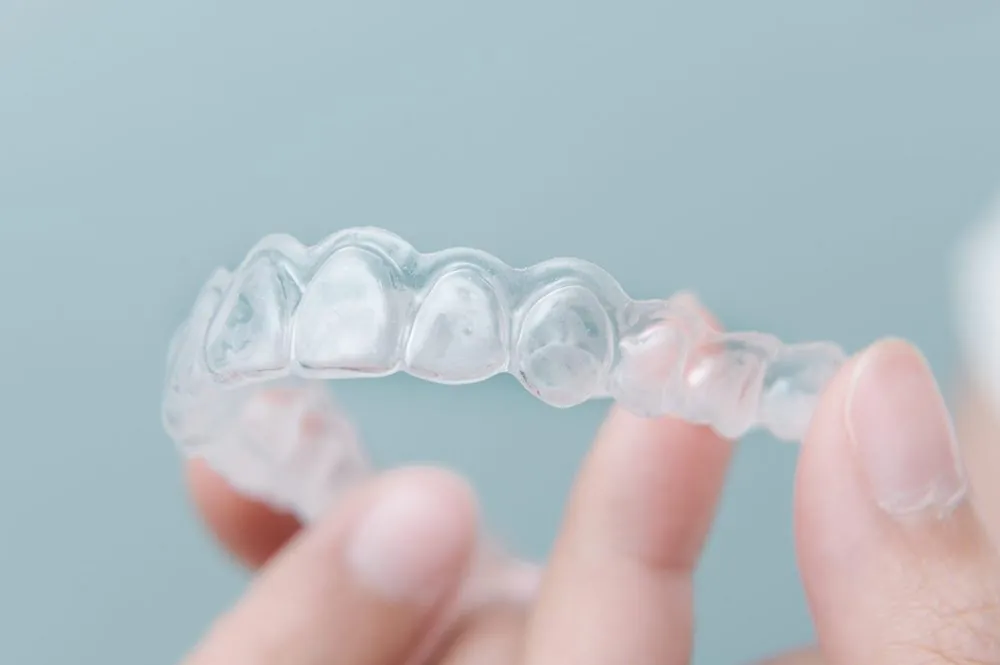
Invisalign — at a glance
| Treatment | Invisalign clear aligner therapy |
|---|---|
| Appliance | Clear, removable custom-made aligners |
| Best suited to | Mild–moderate crowding, spacing and mild bite issues |
| Wear time | Around 20–22 hours a day |
| Typical duration | Varies by case — several months to 18+ months |
| Visibility | Near-invisible; removable for meals and cleaning |
| Provider | Dr Brendan Quill — 2,000+ orthodontic cases |
| Location | Bondi Junction, Eastern Suburbs Sydney |

Looking for an Invisalign dentist in Bondi Junction?
Choosing an Invisalign dentist is about more than simply receiving a set of aligners. Successful clear aligner treatment requires careful diagnosis, treatment planning and regular monitoring to make sure your teeth are moving as expected and your bite remains healthy throughout treatment.
At Dentist in the Park, your Invisalign treatment is planned and monitored by a dentist who considers not only how straight your teeth will look, but also how your teeth and bite function together.
What we look at before recommending Invisalign
During your consultation we will assess:
- the position and alignment of your teeth
- your bite
- crowding or spacing
- the health of your teeth and gums
- your smile goals
- whether Invisalign is the most suitable treatment option for you.
If another approach may produce a better or more predictable result, we will explain that too.
Invisalign treatment at our Bondi Junction dental clinic
Our Bondi Junction Invisalign clinic offers clear aligner treatment from initial consultation through to your final result. The process usually involves:
1. Invisalign consultation
We assess your teeth, bite and smile and discuss what you would like to change. We can then explain whether Invisalign is appropriate for your particular case and what alternatives may be available.
2. Digital scans and treatment planning
Rather than relying on traditional impressions alone, digital scans can be used to create a detailed model of your teeth. These records allow your dentist to plan how your teeth need to move and develop your Invisalign treatment.
3. Your Invisalign aligners
If you proceed, a series of custom clear aligners is produced for your treatment. Each aligner makes a small, controlled change to the position of your teeth. You generally progress through the aligners according to the schedule provided by your dentist.
4. Progress check-ups
Regular appointments at our Bondi Junction dental clinic allow us to check that your teeth are tracking as planned. Adjustments or additional aligners may sometimes be required as treatment progresses.
5. Retainers
Once your teeth have reached their planned position, retainers help maintain your new alignment.
Book an Invisalign consultation and we'll tell you honestly whether it's right for you.
Invisalign or braces?
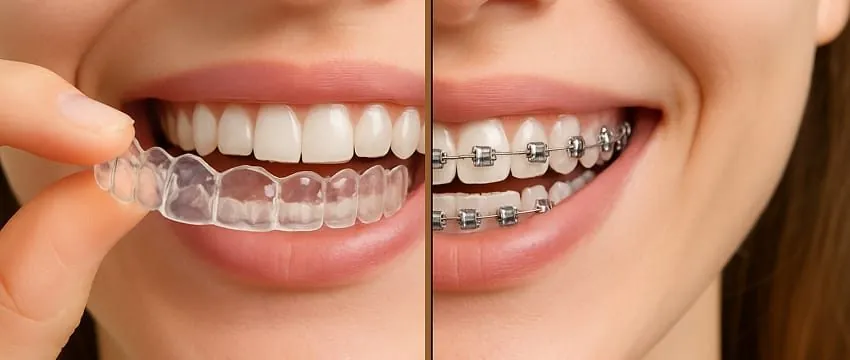
People searching for Invisalign braces are often comparing clear aligners with conventional fixed braces. While both treatments can straighten teeth, they work differently.
Invisalign aligners are:
- clear and discreet
- removable
- generally easy to clean around
- removed while eating
- suitable for many common orthodontic problems.
Traditional braces remain an excellent option and may be more appropriate for certain complex tooth movements or bite problems. The important question is therefore not simply whether Invisalign or braces are "better", but which treatment is most appropriate for your teeth and bite. Your dentist can discuss this with you after examining your teeth.
Book an assessment with an experienced Bondi Junction Invisalign provider.
What can Invisalign treat?
Invisalign may be suitable for treating a range of orthodontic concerns, including:
- crowded teeth
- gaps between teeth
- crooked teeth
- some overbites
- some underbites
- some crossbites
- relapse following previous orthodontic treatment.
The degree of correction possible varies from person to person. An Invisalign assessment allows us to determine whether clear aligners are appropriate for your case or whether another treatment would be preferable.
Book your Invisalign assessment at our Bondi Junction clinic today.
Why choose a local Invisalign provider in Bondi Junction?
Clear aligner treatment involves more than the initial fitting of your aligners. You will normally return to your dentist several times throughout treatment so your progress can be reviewed. Choosing an Invisalign provider in Bondi Junction can therefore make ongoing appointments significantly more convenient, particularly if you live or work nearby.
Dentist in the Park is conveniently located for patients from Bondi Junction, Bondi, North Bondi, Woollahra, Waverley, Bellevue Hill, Paddington, Queens Park and the wider Eastern Suburbs.
Invisalign near me
If you have searched for an Invisalign clinic near me, convenience is likely to be important — but it should not be the only consideration. You should also feel comfortable that your dentist:
- properly assesses your bite before treatment
- explains what Invisalign can and cannot achieve
- discusses alternatives where appropriate
- monitors your progress throughout treatment
- has a plan for retention after your teeth have been straightened.
Our Invisalign clinic is located in Bondi Junction, making regular treatment reviews convenient for patients throughout Sydney's Eastern Suburbs. You can also compare all your removable options on our clear aligners page, read about Angel Aligners, or see how the two systems compare in our Angel Aligner vs Invisalign guide.
Invisalign FAQs
Is Invisalign suitable for everyone?
How many hours a day do I need to wear Invisalign?
Can I eat with Invisalign in?
Does Invisalign hurt?
Is Invisalign faster than braces?
Can I have Invisalign if I already have crowns or veneers?
Will my teeth move back after Invisalign?

Invisalign treatment with Dr Brendan Quill
Every Invisalign case at Dentist In The Park is assessed, planned and monitored by Dr Brendan Quill personally. His starting point is always a full orthodontic assessment — teeth, gums, bite and long-term stability — rather than assuming aligners are the right answer. With more than 2,000 orthodontic cases across clear aligners and braces, he can tell you honestly whether Invisalign, Angel Aligners, braces or a staged approach will give you the best and most stable result.
Dr Brendan Quill — Principal Dentist
BDS (University of Sydney) · 35+ years in practice · 2,000+ orthodontic cases · worked under specialist orthodontist Dr Derek Mahony
We never want cost to stand between you and the care you need. We accept all health funds, with HICAPS claiming on the day so you only pay the balance — and flexible payment plans are available, just ask our team. CBHS members can also ask about in-practice claiming for routine exams, cleans and X-rays.
Book an assessment with Dr Quill at our Bondi Junction clinic and we'll tell you honestly whether Invisalign is right for your smile — no pressure, just clear advice.
Helpful articles on this topic
Practical, honest guidance from Dr Brendan Quill on the topics that matter for your care.

Composite bonding is a cosmetic treatment in which a tooth-coloured resin is shaped and glued onto a tooth to…
Read more →
Dentures are removable replacements for missing teeth and the surrounding tissue. A full denture replaces all the…
Read more →
Dental anxiety is usually eased with a combination of open communication, a calm and unhurried approach, and…
Read more →
The main ways to replace missing teeth are dental implants, which are artificial roots placed in the jaw to…
Read more →