
Root Canal Treatment in Bondi Junction
Gentle, effective root canal treatment in Bondi Junction to relieve tooth pain and save a tooth that might otherwise be lost. Done well, it's a comfortable, routine procedure, and Dr Brendan Quill will talk you through every step before we begin.
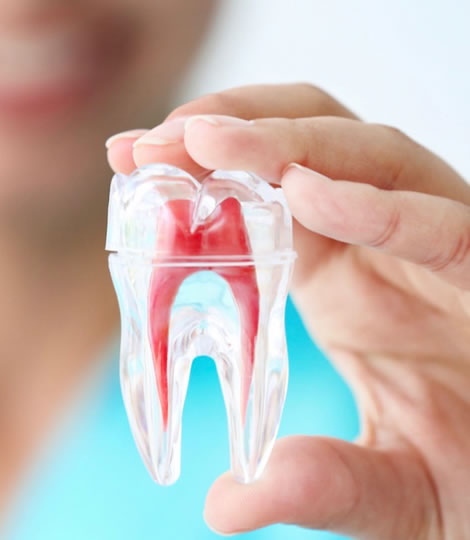
Root Canal — at a glance
| Treatment | Root canal (endodontic) therapy |
|---|---|
| Purpose | Relieve pain and save an infected or badly decayed tooth |
| Appointments | Usually 1–2 |
| Anaesthetic | Yes — the tooth is fully numbed |
| Comfort | Similar to having a filling for most people |
| Afterwards | A crown is often recommended to protect the tooth |
| Alternative | Extraction (± implant or bridge) where a tooth can't be saved |
| Location | Bondi Junction, Eastern Suburbs Sydney |
Relieving pain and saving your tooth
When the soft tissue inside a tooth — the pulp — becomes infected or inflamed, it can cause real pain, and left alone it can lead to an abscess and the loss of the tooth. A root canal treats the problem at its source: we remove the infected tissue, clean and disinfect the inside of the tooth, and seal it, so you can keep a tooth that would otherwise have to come out.
I know the words "root canal" make a lot of people nervous. In practice, modern root canal treatment is far more comfortable than its reputation suggests — for most people it feels similar to having a filling. The goal is simple: get you out of pain and save your natural tooth wherever it's sensible to do so.
When a tooth needs a root canal
The pulp inside a tooth can become infected or inflamed for a few reasons — most often deep decay, a crack, a knock to the tooth, or repeated dental work over the years. Common signs a tooth may need root canal treatment include:
- lingering pain, especially to hot or cold, that doesn't settle
- pain when biting or putting pressure on the tooth
- a pimple-like swelling on the gum, or facial swelling
- a tooth that has darkened
- ongoing tenderness or a dull ache
Sometimes there are no symptoms at all, and the problem is picked up on an X-ray. Infections don't resolve on their own and tend to get worse, so if you notice any of these signs it's worth having the tooth assessed sooner rather than later.
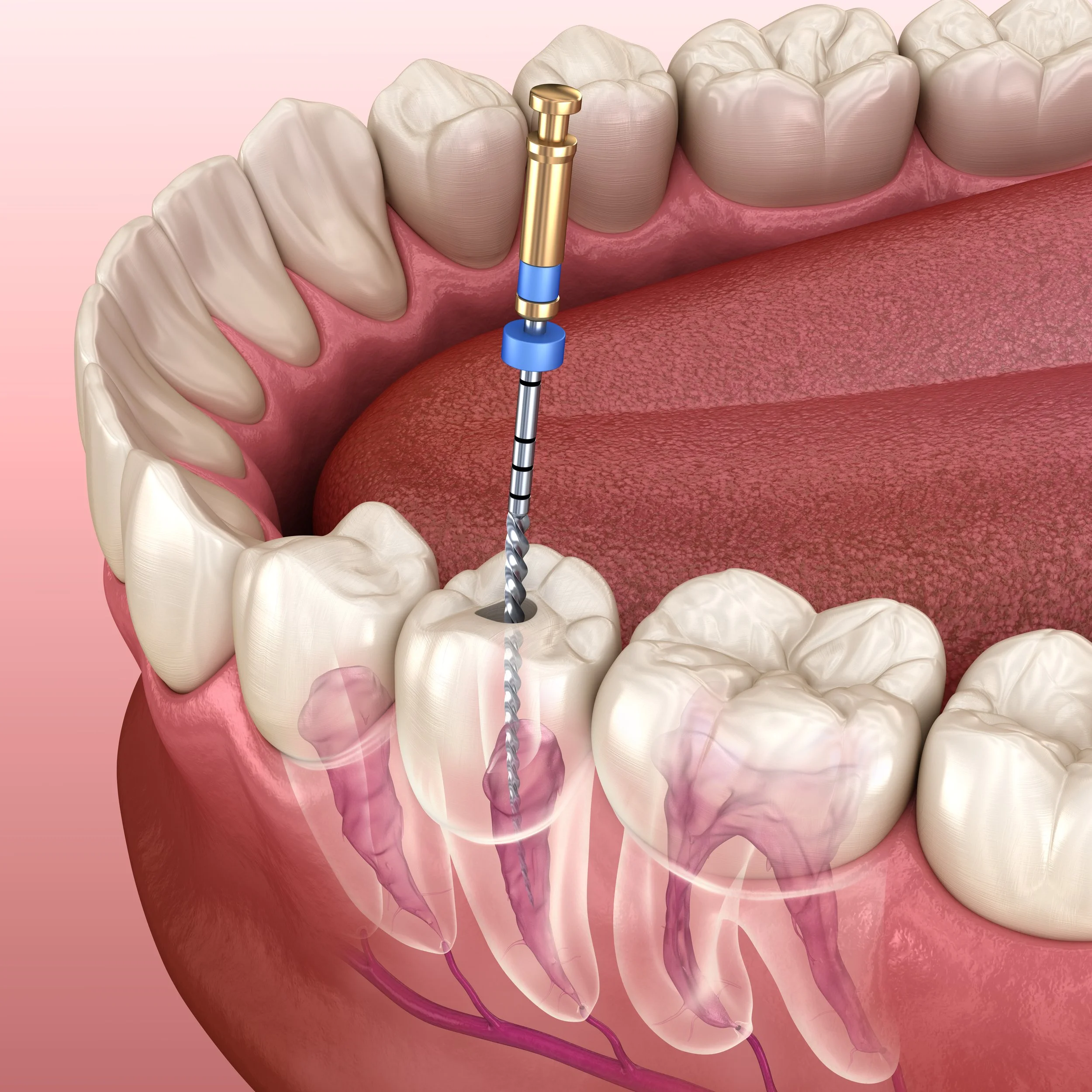
What happens during root canal treatment
The treatment is usually completed over one or two visits, depending on the tooth. In broad terms:
1. Assessment — an X-ray and some simple tests confirm the diagnosis and plan the treatment.
2. Numbing — the tooth and the area around it are fully numbed, so the procedure itself is comfortable.
3. Cleaning — a small opening is made in the tooth, the infected or inflamed pulp is removed, and the fine canals inside the roots are cleaned and shaped.
4. Sealing — the cleaned canals are filled and sealed to prevent re-infection, and the tooth is closed with a filling.
5. Protecting the tooth — because a root-treated tooth can become more brittle, a crown is often recommended afterwards to protect it and restore full function.
Most people are surprised by how straightforward it is. The relief of a painful tooth finally settling down is usually the part patients remember most.
Book an assessment and we'll get you out of discomfort and explain your options.
Root canal or extraction?
A common question is whether it's better to have a root canal or simply take the tooth out. Wherever it's realistic, keeping your natural tooth is usually the better long-term choice — nothing replaces a natural tooth quite as well, and losing one can let neighbouring teeth shift and lead to further treatment down the track. That said, a root canal isn't always the right answer: if a tooth is too badly broken down or its long-term outlook is poor, an extraction — sometimes followed by a dental implant or bridge — may be the more sensible option. I'll give you an honest assessment of the tooth and talk you through the realistic choices, rather than pushing one path.
After your root canal
The tooth may feel tender for a few days as it settles, which usually responds well to ordinary pain relief. It's best to go easy chewing on it until it has been permanently restored, ideally with a crown where that's recommended. Good day-to-day cleaning and regular check-ups then help the tooth last for many years.
Book a check-up — we'll assess the tooth and talk you through it honestly.
Protecting the tooth long-term
Because the tooth no longer has a living pulp, it can become more brittle over time, so protecting it — usually with a crown — is part of the treatment, not an optional extra. Keeping up with routine check-ups and cleans lets us keep an eye on it and catch anything early.
If you're nervous about a root canal
If the idea of a root canal makes you anxious, you are far from alone — and please tell us. We take an unhurried approach, explain what's happening as we go, and can talk through ways to keep you comfortable. For a lot of patients, the anticipation turns out to be far worse than the treatment itself.
Root canal near me
If you've searched for a root canal near me, you may be in discomfort and wanting to be seen without a long trip. A nearby dentist means you can be assessed quickly, get out of pain, and come back easily for any follow-up.
Our Bondi Junction practice cares for patients across Bondi, Waverley, Woollahra, Bellevue Hill and the wider Eastern Suburbs.
Root canal treatment FAQs
Does a root canal hurt?
How many appointments does a root canal take?
Do I need a crown after a root canal?
Is it better to save the tooth or pull it out?
What happens if I don't treat an infected tooth?
How much does a root canal cost?
Can I drive home or go back to work afterwards?
Which areas does Dentist In The Park service?

Root canal treatment with Dr Brendan Quill
Root canal treatment at Dentist In The Park is carried out by Dr Brendan Quill himself, drawing on more than 35 years of general and restorative dentistry. His priority is getting you comfortable and saving the tooth wherever it's sensible to do so — and he's honest when an extraction would give you a better long-term result than trying to hold on to a tooth that is too far gone. From diagnosis through to the final restoration, your care stays with the same dentist you already know.
Dr Brendan Quill — Principal Dentist
BDS (University of Sydney) · 35+ years in practice · 2,000+ orthodontic cases · worked under specialist orthodontist Dr Derek Mahony
We never want cost to stand between you and the care you need. We accept all health funds, with HICAPS claiming on the day so you only pay the balance — and flexible payment plans are available, just ask our team. CBHS members can also ask about in-practice claiming for routine exams, cleans and X-rays.
Book an assessment with Dr Quill — we'll find out what's going on, get you out of pain, and talk you through whether a root canal can save the tooth.
Helpful articles on this topic
Practical, honest guidance from Dr Brendan Quill on the topics that matter for your care.

Composite bonding is a cosmetic treatment in which a tooth-coloured resin is shaped and glued onto a tooth to…
Read more →
Dentures are removable replacements for missing teeth and the surrounding tissue. A full denture replaces all the…
Read more →
Dental anxiety is usually eased with a combination of open communication, a calm and unhurried approach, and…
Read more →
The main ways to replace missing teeth are dental implants, which are artificial roots placed in the jaw to…
Read more →