Snoring & Sleep Apnoea Treatment in Bondi Junction
An effective alternative to mask treatment for sleep apnoea and snoring — so you (and your partner) can finally get a good night's sleep.
Why choose Dentist in the Park for sleep apnoea treatment?
Dr Quill has extensive experience in dental sleep medicine. He understands the nuances of airway anatomy, jaw positioning, and how to create appliances that work effectively without causing jaw problems.
We work collaboratively with sleep physicians, ensuring you receive comprehensive care that addresses both the medical and dental aspects of treatment.
Our approach is thorough, patient-centred, and focused on long-term success. We won't rush you through fittings or leave you to figure things out on your own — we're with you throughout the process, making adjustments and ensuring the treatment is actually improving your sleep and health.
When snoring is more than just annoying
If you snore loudly, wake up gasping for air, or feel exhausted despite spending 8 hours in bed, you might have obstructive sleep apnoea (OSA) — a serious condition where your airway repeatedly collapses during sleep, cutting off your oxygen supply.
Sleep apnoea isn't just about snoring or disturbing your partner. Left untreated, it significantly increases your risk of:
- High blood pressure and heart disease
- Stroke
- Type 2 diabetes
- Depression and mood disorders
- Daytime fatigue and impaired concentration
- Motor vehicle accidents due to drowsiness
The good news? Effective treatment exists, and it doesn't necessarily mean sleeping with a CPAP machine.
Dr Brendan Quill specialises in oral appliance therapy — a proven, comfortable alternative to CPAP that many patients find easier to use consistently. After years of helping Eastern Suburbs patients reclaim restful sleep, he's seen firsthand how life-changing proper treatment can be.
What is oral appliance therapy?
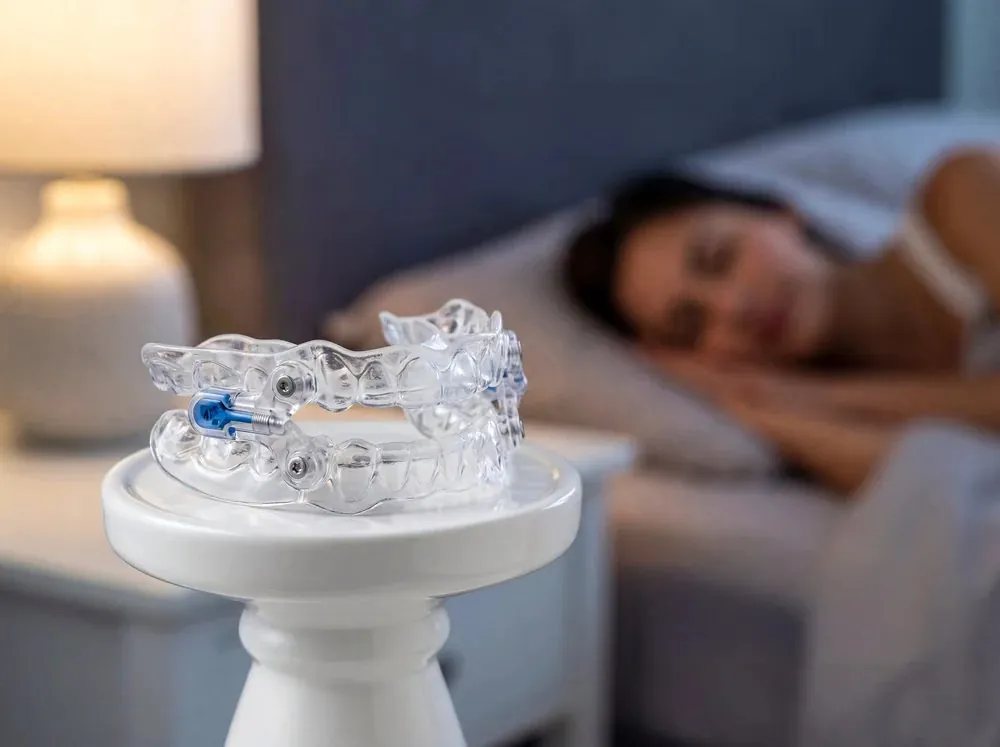
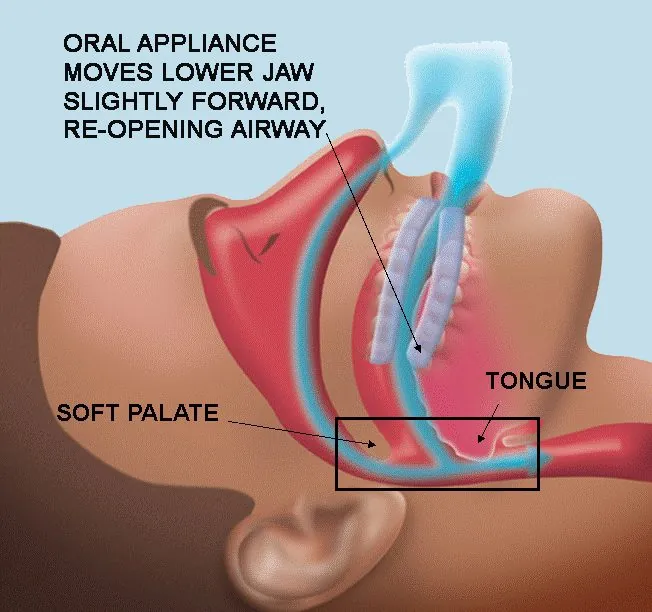
Oral appliance therapy uses a custom-fitted dental device (similar to a mouthguard or retainer) that you wear while sleeping. The appliance works by gently holding your lower jaw forward, which keeps your airway open and prevents the collapse that causes apnoea and snoring.
Think of it as creating a clear path for air to flow — no mask, no hose, no electricity required.
Why patients prefer oral appliances:
- Comfortable and discreet — small, quiet, and easy to wear
- Portable — perfect for travel, fits in your pocket
- Easy to use — no complicated setup or cleaning routines
- Higher compliance — people actually wear them consistently
- Effective — clinically proven to treat mild to moderate sleep apnoea
- Relationship saver — finally, quiet nights for your partner
How does it compare to CPAP?
CPAP (Continuous Positive Airway Pressure) is the gold standard treatment for severe sleep apnoea, and it works extremely well — when people actually use it. The problem? Many patients find CPAP masks uncomfortable, claustrophobic, or impractical, leading to poor compliance.
Oral appliances are ideal if you:
- Have mild to moderate sleep apnoea
- Can't tolerate CPAP or have tried and given up
- Travel frequently for work
- Want a quieter, less intrusive solution
- Have a bed partner who's tired of the CPAP noise
- Simply want an alternative to consider
For severe sleep apnoea, CPAP is often still the most effective option. But for many patients with mild to moderate OSA, oral appliances deliver comparable results with much better compliance — and consistent treatment is what actually improves your health.
We're not here to talk you out of CPAP if it's working for you. But if you've struggled with it or never wanted to try it in the first place, oral appliance therapy might be exactly what you need.
Snoring affecting your sleep — or your partner's?
Book an assessment to see if an oral appliance could help.
Who benefits from oral appliance therapy?
You might be a good candidate if you:
- Have been diagnosed with mild to moderate obstructive sleep apnoea
- Snore loudly and regularly (your partner will confirm this)
- Experience daytime fatigue despite adequate sleep time
- Wake up with headaches or a dry mouth
- Have been told you stop breathing or gasp during sleep
- Can't tolerate CPAP or refuse to use it
- Travel frequently and need a portable solution
Oral appliances work best for patients who:
- Have healthy teeth and gums (the device needs stable teeth to attach to)
- Don't have severe TMJ disorders
- Are motivated to treat their sleep apnoea consistently
During your consultation, we'll assess whether oral appliance therapy is right for your specific situation.
The treatment process
1. Initial consultation & assessment — We'll review your sleep study results (if you have one), discuss your symptoms, and examine your teeth, jaw, and airway. If you haven't had a sleep study, we can refer you to a sleep specialist for proper diagnosis — oral appliances are prescription devices that require a sleep apnoea diagnosis.
2. Custom device fitting — If you're a good candidate, we'll take detailed impressions or digital scans of your teeth to create a custom-fitted appliance. Unlike over-the-counter devices, custom appliances are precisely fitted to your mouth for maximum comfort and effectiveness.
3. Adjustment & calibration — At your fitting appointment, we'll ensure the appliance fits comfortably and adjust the jaw position to optimise airway opening. Fine-tuning is normal — we'll schedule follow-up visits to make adjustments as needed.
4. Follow-up & monitoring — After you've been using the appliance for a few months, we'll coordinate with your sleep physician for a follow-up sleep study to confirm the device is working effectively. We'll continue to monitor your progress and make adjustments to ensure optimal results.
5. Ongoing care — We'll see you periodically to check the appliance's condition, assess your bite and jaw health, and make sure the device continues working properly. With good care, oral appliances typically last 3–5 years before needing replacement.
Told you may have mild-to-moderate sleep apnoea?
We'll explain how oral appliance therapy compares to CPAP.
Custom-fitted makes all the difference
You might have seen cheaper "boil and bite" snoring mouthpieces advertised online or in pharmacies. While these might reduce snoring in some people, they're not effective for treating sleep apnoea and often lead to jaw discomfort or tooth movement.
Custom-fitted oral appliances made by a dentist experienced in sleep medicine are:
- Precisely calibrated to your bite and airway needs
- Constructed from durable, medical-grade materials
- Adjustable for optimal effectiveness
- Designed to protect your teeth and jaw health
- Covered by many health insurance plans (with proper diagnosis)
This isn't just a snoring solution — it's medical treatment for a serious condition. Getting it right matters.
Will it feel uncomfortable?
Most patients adjust to their oral appliance within a week or two. You might experience:
- Mild jaw soreness for the first few days (similar to wearing braces)
- Increased salivation initially (your mouth adapts quickly)
- Temporary tooth sensitivity
These effects typically resolve as you get used to the device. If discomfort persists, we'll adjust the appliance to improve comfort. The key is communication — let us know what you're experiencing so we can fine-tune the fit.
The vast majority of our patients find oral appliances far more comfortable than CPAP masks and actually look forward to better sleep rather than dreading bedtime.
Real results that improve your life
When sleep apnoea is properly treated, patients notice:
- Better sleep quality — waking refreshed instead of groggy
- More energy — no more 3pm crashes or constant fatigue
- Improved focus — sharper thinking and better concentration
- Better mood — less irritability and depression
- Relationship benefits — peaceful nights for both you and your partner
- Health improvements — reduced cardiovascular risk, better blood pressure control
One of Dr Quill's favourite moments is when patients return for follow-ups and report how much better they feel — partners are often equally thrilled.
For more on how oral appliance therapy works, see our guide to snoring and sleep apnoea treatment in Bondi Junction.
Snoring & sleep apnoea, explained
What is sleep apnoea?
Read the transcript
What is sleep apnoea? Sleep apnoea is a potentially serious sleep disorder in which you regularly stop and start breathing during the night. There are three forms: obstructive sleep apnoea, where your jaw drops back or your throat becomes constricted due to loss of muscle tone; central sleep apnoea, where the brain doesn't deliver the right signal to the muscles; and complex, which is a combination of the two. If you have any of these symptoms — or snoring, and a classic sign is waking after a full night's sleep still feeling really tired — then you really need to get a sleep study. We can organise that here, or you can go through your GP. It will tell you the range you sit in: mild, moderate or severe. If you're severe, you probably need a CPAP. But if you're mild or moderate — or you have real trouble tolerating CPAP — a mandibular advancement splint can be really good: if it doesn't cure you, it will at least bring you down from one level to the next.
What can Dentist in the Park do for snoring?
Read the transcript
A question I'm often asked is: what can the dentist do for snoring? What we can provide is what's called a mandibular advancement splint — they're very good for snoring. But we're also looking at sleep apnoea, and here's an interesting point: you don't have to be a snorer to have sleep apnoea, but 70 to 80 per cent of snorers do have some form of sleep apnoea. So snoring is a red flag to come in and let us see what we can do.
Snoring and sleep apnoea treatment near me
If you've searched for snoring or sleep apnoea treatment near me, a local dentist makes it easy to be fitted for a custom oral appliance and to come back for the small adjustments that get it working comfortably.
We're based in Bondi Junction and see patients from Bondi, Waverley, Woollahra, Bellevue Hill and the surrounding Eastern Suburbs.
Frequently asked questions
How effective are oral appliances for sleep apnoea?
Can an oral appliance help with snoring even if I don't have sleep apnoea?
Do I need a sleep study before getting an oral appliance?
Will my health insurance cover oral appliance therapy?
How long does an oral appliance last?
Can I use an oral appliance if I have dental work like crowns or implants?
What if I grind my teeth?
Will an oral appliance change my bite or move my teeth?
How do I clean and maintain my oral appliance?
What if the oral appliance doesn't work for me?
Can I travel with an oral appliance?
How quickly will I notice results?

Snoring and sleep appliances with Dr Brendan Quill
Snoring and mild sleep apnoea treatment at Dentist In The Park is provided by Dr Brendan Quill, for whom dental sleep appliances are a long-standing interest. He assesses whether a custom oral appliance is suitable, works alongside your doctor where a medical diagnosis is needed, and fits and adjusts the appliance for comfort and effect. His focus is a practical, well-tolerated solution rather than a one-size-fits-all device.
Dr Brendan Quill — Principal Dentist
BDS (University of Sydney) · 30+ years in practice · 2,000+ orthodontic cases · worked under specialist orthodontist Dr Derek Mahony
Worried about cost?
We never want cost to stand between you and the care you need. We accept all health funds, with HICAPS claiming on the day so you only pay the balance — and flexible payment plans are available, just ask our team. CBHS members can also ask about in-practice claiming for routine exams, cleans and X-rays.
Ready for better sleep?
If you're tired of feeling tired — or if your partner is tired of your snoring — book a sleep apnoea consultation to discuss whether oral appliance therapy is right for you.
Helpful articles on this topic
Practical, honest guidance from Dr Brendan Quill on the topics that matter for your care.
Sleep Apnoea & Snoring Treatment in Bondi Junction — Oral Appliance Therapy Explained
2 June 2026Dentists treat snoring and mild to moderate obstructive sleep apnoea with a custom oral appliance, usually a…
Read more →
How to Choose a Dentist in Bondi Junction
17 February 2026Choosing a dentist is a personal decision. It is not just about finding the closest clinic, the nicest website, or…
Read more →
Family Dental Care Through Every Stage of Life
5 May 2026One of the great privileges of general dentistry is caring for families over many years. I have seen children come…
Read more →
Dental Anxiety in Bondi Junction — Gentle, Calm Care for Nervous Patients
3 July 2026Dental anxiety is usually eased with a combination of open communication, a calm and unhurried approach, and…
Read more →