Porcelain Veneers in Bondi Junction
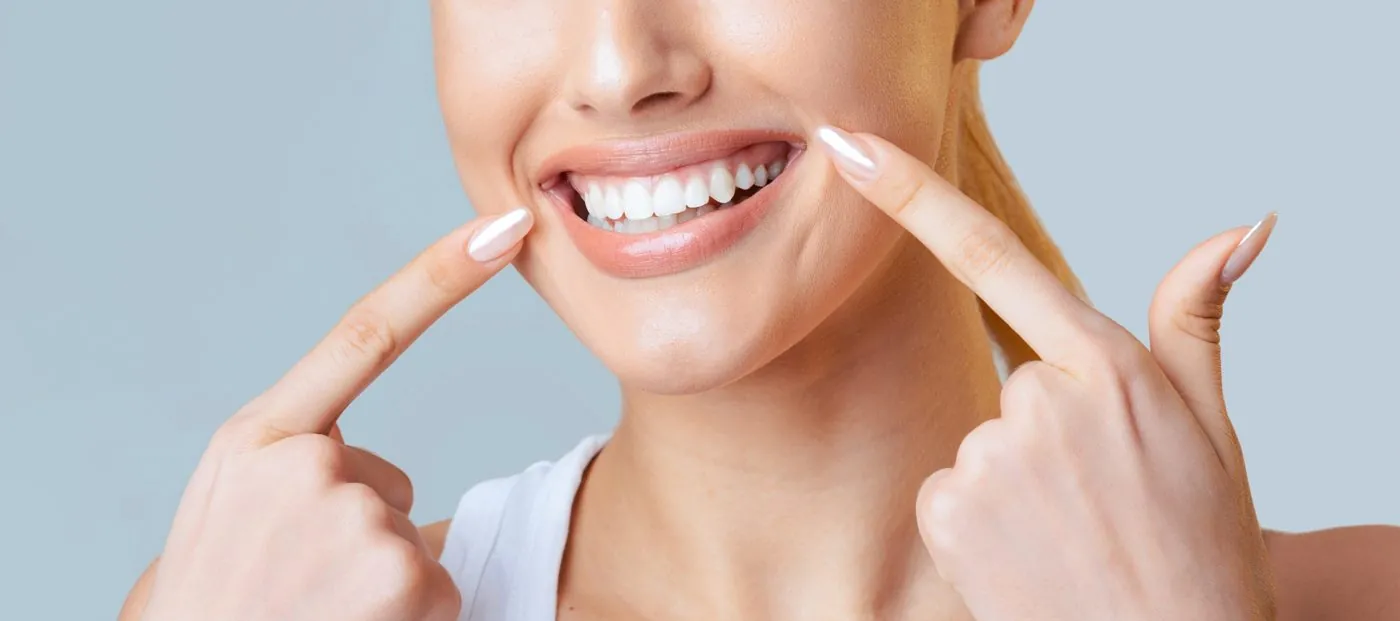
Natural-looking ceramic veneers designed around your smile — thin, custom-made porcelain bonded to the front of your teeth to change their shape, colour, proportion or symmetry, and only when they are genuinely the right option.
Porcelain Veneers — at a glance
| Material | Dental ceramic (porcelain) |
|---|---|
| Treatment | Individually made, then bonded |
| Appointments | Usually 2 or more |
| Tooth reduction | Some enamel preparation often needed |
| Repairable | More difficult than composite |
| Stain resistance | Excellent |
| Best suited to | Larger changes and long-term colour stability across several teeth |
| Location | Bondi Junction |
A significant cosmetic change — when it is the right choice
Porcelain veneers can produce a significant cosmetic change, particularly when several front teeth are affected by wear, discolouration, uneven shape or multiple aesthetic concerns.
But at Dentist In The Park, porcelain veneers are not something we recommend simply because someone wants a better smile. Dr Brendan Quill's approach is to first ask whether the result can be achieved more conservatively with whitening, orthodontics or composite — and, if porcelain is the better option, how we can preserve as much healthy natural tooth as reasonably possible.
The goal isn't a row of identical white teeth. It's a smile that suits you.
What are porcelain veneers?
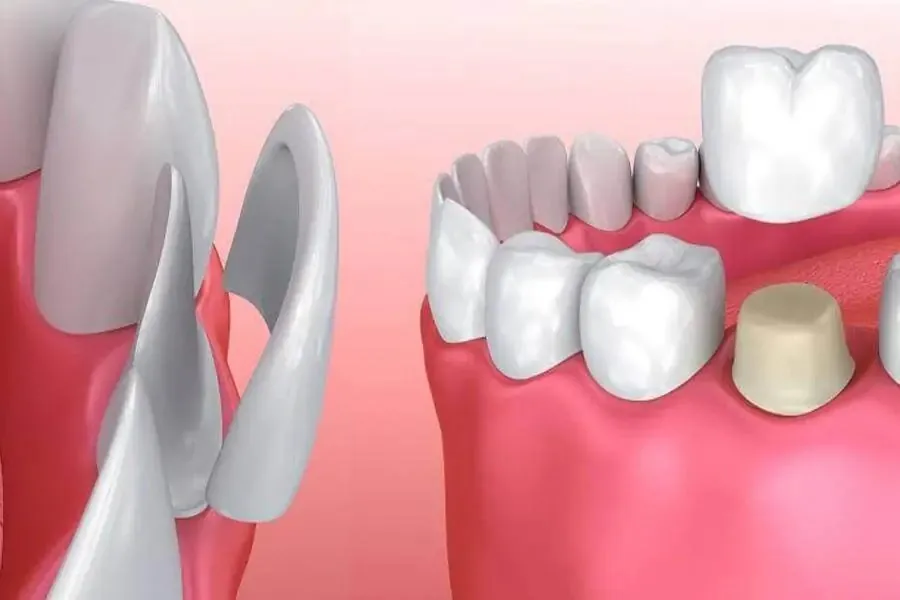
Porcelain veneers are individually made, very thin ceramic restorations that cover the visible front surface of teeth. They are bonded permanently to the underlying tooth and can change several features at once, including:
- tooth colour
- shape
- length
- width
- proportion
- symmetry
- surface appearance
Porcelain has optical properties that can closely resemble natural enamel, which is one reason it can produce very natural-looking cosmetic results. It is also highly resistant to staining and maintains its surface finish better than composite resin.
What can porcelain veneers improve?
Porcelain veneers may be considered for teeth that are:
- permanently discoloured
- worn or shortened
- uneven in shape
- chipped
- slightly irregular
- disproportionately small
- affected by multiple old cosmetic restorations
- separated by small spaces
- visually asymmetrical across the smile
They can be particularly useful when the aim is to make a coordinated change across several front teeth rather than correct one isolated problem. That doesn't mean every cosmetic concern needs veneers. If teeth whitening, composite bonding or orthodontics can give you the result you want with less alteration to your natural teeth, we will discuss those options first.
Our approach to porcelain veneers
There is a big difference between putting veneers on teeth and designing a smile. For us, good cosmetic dentistry starts with restraint. After more than 35 years in dentistry, Dr Brendan Quill has become increasingly interested in what we can preserve rather than how much dentistry we can do.
Before recommending porcelain veneers we ask:
- Can whitening solve the colour concern?
- Are the teeth in a position where veneers will look natural?
- Would moving them first reduce the amount of tooth preparation required?
- Could composite achieve the change more conservatively?
- How much healthy enamel would need to be altered?
- Does porcelain genuinely offer an advantage for this particular patient?
Sometimes porcelain is clearly the best answer. Sometimes it isn't. We would rather explain that before treatment than recommend dentistry you don't need.
Do porcelain veneers require your teeth to be shaved down?
Sometimes a small amount of enamel needs to be removed to create enough room for the veneer and achieve a natural contour. How much depends on:
- the existing shape of the tooth
- its position in the dental arch
- how much colour change is required
- the thickness needed for the ceramic
- the result we are trying to achieve
In carefully selected cases, preparation can be very minimal. In others, attempting a completely no-preparation veneer could result in teeth looking too bulky or prominent. This is why the aim shouldn't simply be "no drilling". The aim should be the least intervention required to produce a predictable, healthy and natural-looking result.
Porcelain veneers or composite veneers?
Both can improve the shape and appearance of teeth, but they involve different materials and trade-offs.
Porcelain veneers
Porcelain veneers are individually made from ceramic and then bonded to the teeth. They offer:
- excellent resistance to staining
- very good colour stability
- excellent surface finish
- predictable shape and proportions
- high-quality aesthetics across several teeth
- greater resistance to wear than composite
Their disadvantages include a higher cost, more treatment planning, usually more than one appointment, some enamel preparation in many cases, and more difficult repair if damaged.
Composite veneers
Composite veneers are generally built directly onto the teeth using tooth-coloured resin. They can offer little or no tooth reduction in suitable cases, fewer appointments, lower cost, easier repair and greater flexibility to alter the result. Composite will usually stain and wear more readily than porcelain and can be more prone to chipping.
Neither is automatically better. For some smiles, composite provides the perfect conservative solution. For others, the colour stability, surface quality and durability of porcelain make it worth the additional commitment — our composite veneers page compares the two in more detail.

Porcelain veneers or composite bonding?
Composite bonding is generally used to make smaller changes. For example, it may be ideal for repairing one chipped corner, reshaping one irregular tooth, closing a small gap or smoothing a worn edge.
Porcelain veneers become more relevant when a larger proportion of the visible tooth needs changing, or when several teeth need coordinated changes in colour, shape and proportion. If the problem can be solved well with bonding, we don't automatically escalate to veneers — our composite bonding page explains the smaller-scale option in more detail.
Wondering if porcelain is right for your smile?
Book a cosmetic assessment — we'll give you a straight answer.
Could clear aligners be better than veneers?
Sometimes. If the main reason a smile looks uneven is tooth position rather than tooth shape, orthodontics may be the more conservative treatment. Moving the teeth can improve alignment, close or redistribute spaces, reduce crowding, improve symmetry, and create room for conservative bonding or veneers afterwards.
In some cases, a combination of clear aligners, whitening and a small amount of composite can achieve the desired result without porcelain veneers at all. This is one reason it is useful to see a dentist who considers orthodontic and restorative options rather than veneers in isolation.
What happens when you have porcelain veneers?
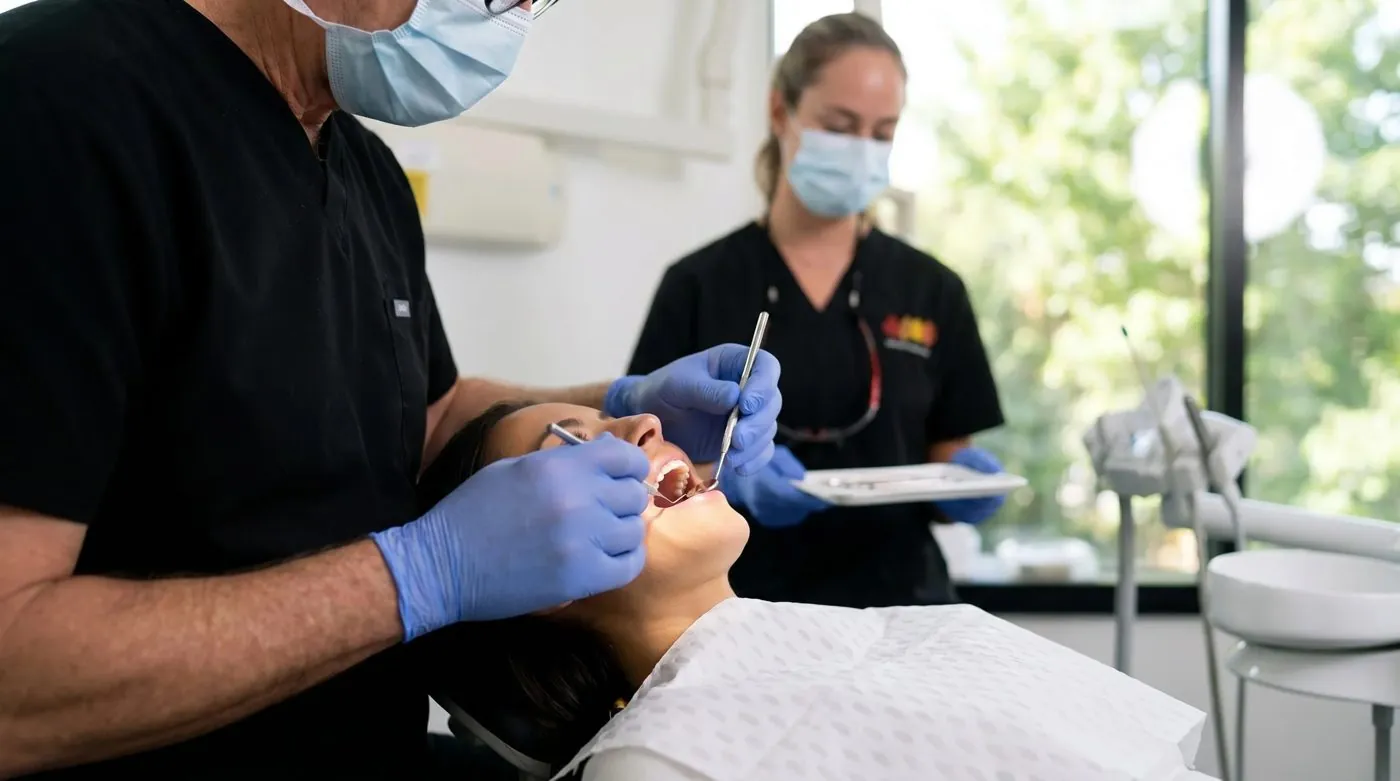
Every smile is different, but treatment generally follows several stages.
1. We start with what you want to change
Rather than starting with a number of veneers, we start with the problem. What bothers you when you smile — is it colour, shape, tooth length, spacing, wear, or an overall sense that the smile looks uneven? Understanding that determines what treatment makes sense.
2. We assess the teeth, gums and bite
We look at tooth health, gum health, existing restorations, available enamel, tooth position, bite, grinding or clenching, smile line and facial proportions. Any underlying dental problems should be addressed before cosmetic treatment begins.
3. We plan the smile
Veneer design isn't just about choosing a shade. We consider tooth length, width-to-length proportions, curvature, symmetry, incisal edge position, the relationship with the lips, gum contours and how the teeth relate to the face. The objective is a smile that looks harmonious rather than manufactured.
4. We prepare the teeth where necessary
Where preparation is required, we aim to keep it as conservative as possible. The amount will depend on the individual tooth and the planned result.
5. The veneers are made
The restorations are individually designed and created from dental ceramic.
6. We check the result
Before final bonding, we assess fit, shape, colour and how the veneers relate to the surrounding teeth.
7. The veneers are bonded
The ceramic veneers are bonded securely to the prepared tooth surfaces and your bite is carefully checked.
How many porcelain veneers do I need?
There isn't a standard number. Some people need one veneer to restore a single discoloured or irregular tooth; others want to change the appearance of several teeth that show when they smile. The appropriate number depends on how many teeth are visible, which teeth are actually causing the concern, tooth colour, symmetry, smile width and your aesthetic goals. More veneers do not automatically produce a better smile — often the best cosmetic result comes from treating the fewest teeth necessary.
Will porcelain veneers look natural?
That is the intention. Natural teeth contain variations in translucency, brightness, texture, shape, edge character and colour, and a natural smile doesn't necessarily mean every tooth should be perfectly identical. We aim to create proportions, contours and colour that suit your existing teeth, lips and face. For many of our patients, the nicest compliment isn't "great veneers" — it's "you look really well".
Do porcelain veneers stain?
Dental porcelain is much more resistant to staining than composite resin. Coffee, tea and red wine do not generally discolour porcelain in the same way they can stain natural teeth or composite restorations. However, the natural teeth around the veneers can still change colour, and the gums and margins around the restorations still need good daily care.
Porcelain or composite?
We'll explain the trade-offs clearly before any treatment begins.
How long do porcelain veneers last?
There isn't one lifespan that can be guaranteed for every patient. Longevity depends on the underlying teeth, the quality and amount of enamel, bite forces, grinding or clenching, oral hygiene, gum health, trauma and maintenance. Porcelain is durable, but it is not indestructible. Regular dental examinations allow us to monitor both the veneers and the teeth underneath them.
Can porcelain veneers chip or break?
Yes. Although modern ceramic restorations can be very strong when correctly designed and bonded, veneers can still chip or fracture. The risk may be higher if you grind or clench heavily, bite hard objects, bite fingernails, have significant bite problems, or experience trauma to the teeth. If we identify a high grinding risk, we may discuss using a night guard to protect the restorations.
Do porcelain veneers damage your natural teeth?
Placing porcelain veneers frequently requires some permanent alteration of the underlying enamel, so the decision should be made carefully. Our approach is to preserve as much sound enamel as reasonably possible and to consider less invasive alternatives before recommending veneers. Once natural tooth has been deliberately removed to accommodate a veneer, it does not grow back — that is why good treatment planning matters.
How much do porcelain veneers cost?
The cost depends on the number of teeth being treated, treatment complexity, how much planning is required, and whether other dental treatment is needed first. After examining your teeth and understanding what you want to achieve, we will give you a clear treatment plan and costs before anything begins. There is no pressure to proceed.
Porcelain veneers near you in Bondi Junction
If you're searching for porcelain veneers near you in Bondi Junction or Sydney's Eastern Suburbs, Dentist In The Park is located at Suite 402, 3 Waverley Street, Bondi Junction NSW 2022. Our Bondi Junction practice is convenient for patients from Bondi, Waverley, Woollahra, Bellevue Hill, Edgecliff, Double Bay and the surrounding Eastern Suburbs. Bondi Junction train station and bus interchange are nearby.
Why choose Dentist In The Park for porcelain veneers?
Principal dentist Dr Brendan Quill has more than 35 years' experience across general, cosmetic, restorative and orthodontic dentistry. That breadth matters when planning veneers, because the alternative to porcelain isn't always another type of veneer — sometimes it's whitening, clear aligners, composite bonding, composite veneers, or a combination of several conservative treatments.
Our job is not to convince you to have porcelain veneers. It is to help you understand which option makes the most sense for your teeth. If porcelain is the right treatment, we aim for a result that is carefully planned, conservative and natural-looking.
Porcelain veneers near me
If you've been looking for porcelain veneers near me, it's worth choosing for skill and planning first — porcelain veneers are made to last and involve a few carefully staged appointments, so the dentist matters more than the shortest drive.
Being based in Bondi Junction keeps those visits convenient for patients from Bondi, Woollahra, Double Bay, Rose Bay and across the Eastern Suburbs.
Frequently asked questions
What are porcelain veneers?
Are porcelain veneers permanent?
Do porcelain veneers require drilling?
Do porcelain veneers stain?
Are porcelain veneers stronger than composite veneers?
Are porcelain veneers better than composite veneers?
Can porcelain veneers fix crooked teeth?
Can I whiten porcelain veneers?
How many veneers will I need?
How long do porcelain veneers last?
Where can I get porcelain veneers near me in Bondi Junction?

Your cosmetic dentist
Porcelain veneers at Dentist In The Park are planned and placed by Dr Brendan Quill, whose focus is a natural result that complements your existing teeth, facial features and bite rather than an overly uniform 'veneered' look. Before recommending veneers, he assesses whether alternatives such as whitening, orthodontic alignment or composite bonding could achieve your goal with less alteration to the natural tooth. Preserving healthy tooth structure guides every step.
Dr Brendan Quill — Principal Dentist
BDS (University of Sydney) · 30+ years in practice · 2,000+ orthodontic cases · worked under specialist orthodontist Dr Derek Mahony
Worried about cost?
We never want cost to stand between you and the care you need. We accept all health funds, with HICAPS claiming on the day so you only pay the balance — and flexible payment plans are available, just ask our team. CBHS members can also ask about in-practice claiming for routine exams, cleans and X-rays.
Thinking about porcelain veneers?
If you're considering changing the shape, colour or proportions of several teeth, the first step is a cosmetic consultation. We'll examine your smile, listen to what you'd like to change, and explain the advantages and limitations of porcelain, composite, bonding, whitening and orthodontic treatment — with clear pricing and no obligation.
Helpful articles on this topic
Practical, honest guidance from Dr Brendan Quill on the topics that matter for your care.
Porcelain vs Composite Veneers — Which Is Right for You?
26 June 2026Veneers are one of the cosmetic treatments people are most curious about, and also one of the most misunderstood.…
Read more →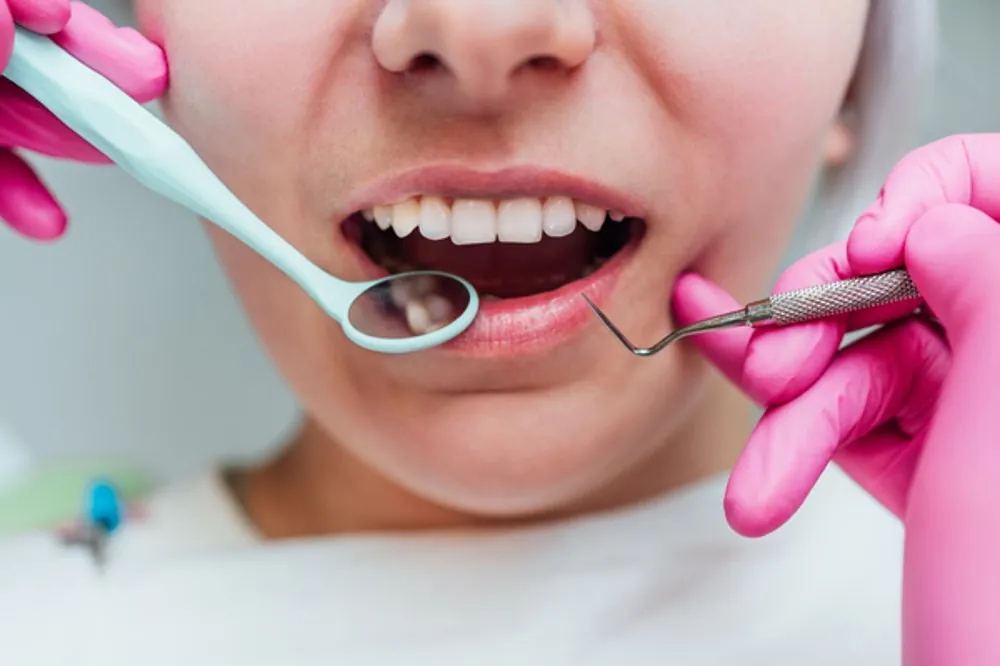
Cosmetic Dentistry in Bondi Junction — Your Main Options Explained
24 March 2026A plain-English guide to your cosmetic dentistry options in Bondi Junction — whitening, bonding, veneers, aligners…
Read more →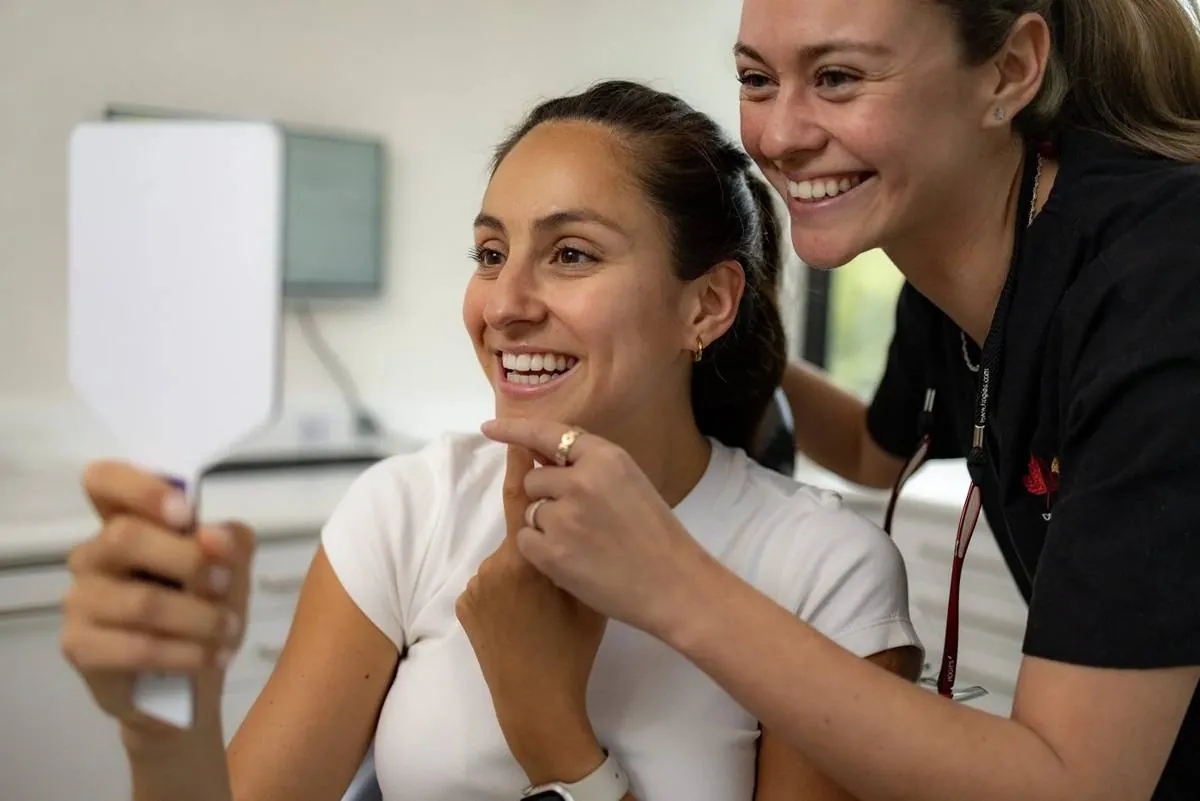
Composite Bonding in Bondi Junction — Fixing Chips, Gaps and Worn Edges
10 July 2026Composite bonding is a cosmetic treatment in which a tooth-coloured resin is shaped and glued onto a tooth to…
Read more →Teeth Whitening in Bondi Junction — What Works, What Lasts and What to Expect
19 May 2026Teeth whitening is the process of lightening the colour of natural teeth. The Australian Dental Association's oral…
Read more →